Back to Stories · 740th Squadron Gallery · Jump to photos
Frank Lashinsky
740th Bomb Squadron · B-24 tail gunner
Wartime service
On March 12, 1945, Staff Sergeant Francis J. “Frank” Lashinsky was aboard B-24L 44-49366 when it went down. He later told aviation writer Gary Wright that, after ball-turret gunner Arthur Colton jumped, he saw Colton’s flying boot caught in the escape hatch. He feared Colton was still hanging from the aircraft.
Lashinsky’s firsthand account
“I grasped the boot, opened the hatch and was relieved to have only the boot in my hand.”
Bailout, captivity, and the return to Gordisa
After the March 12, 1945 raid on Vienna, the crew’s B-24 was too badly damaged to return to Italy. Pilot Richard von Schriltz headed for Pécs, Hungary, but ordered the crew to bail out after the bomber came under further attack. Lashinsky opened the escape hatch, found that Colton had gone clear, and jumped. He landed near a German trench and was taken prisoner.
Lashinsky and other prisoners traveled through Croatia into Germany by rail. When a raid hit the rail yards at Regensburg, the prisoners broke out of their boxcar. They eventually reached Stalag VII-A at Moosburg. In his interview with Gary Wright, Lashinsky remembered seeing the American flag go up when U.S. troops liberated the camp on April 29, 1945.
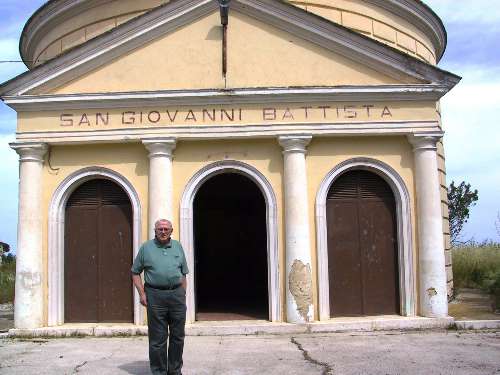
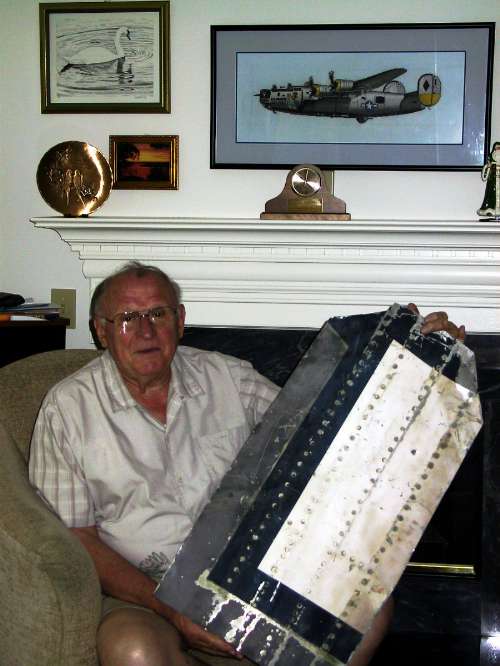
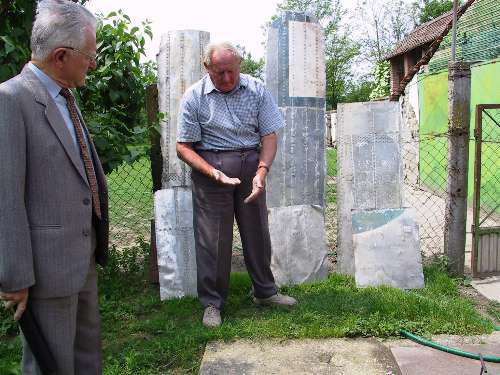
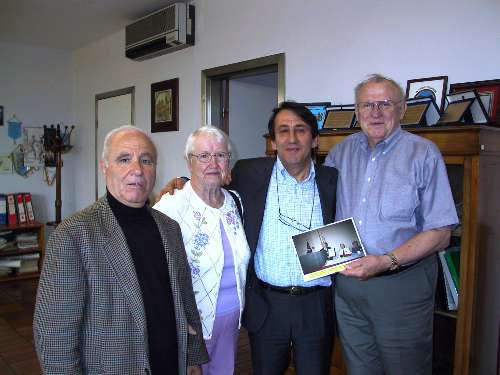
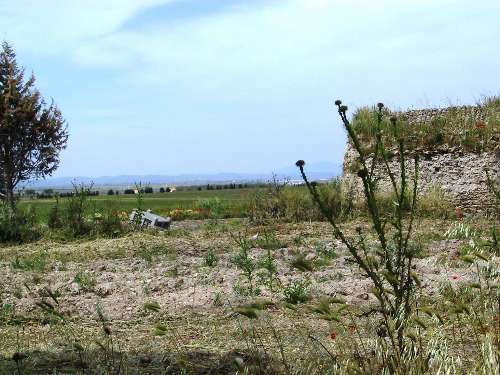
Decades later, a Pentagon inquiry into missing radar officer Charles Adams brought Lashinsky back to the crash site. He traveled with his wife Dorothy, met two eyewitnesses in Gordisa, and returned home with a piece of the bomber. Gary Wright recounts the visit in Return to Gordisa.
Lashinsky’s signed wartime statements
In two statements preserved in Missing Air Crew Report 12941, Lashinsky wrote that he last saw both men aboard the aircraft on March 12, 1945. In the statement concerning Adams, he recalled that the bomber lost an engine and tried to reach Soviet lines. He recorded later notice of Adams’s death in the form’s hearsay section.
In the statement concerning navigator Charles Brazelton, Lashinsky again described the engine loss on the return flight. He wrote in the hearsay section that Brazelton’s wife had received no word from him. The space for eyewitness information about each man’s fate is blank on both forms.
Source: Lashinsky’s statement concerning Adams, PDF page 5 and his statement concerning Brazelton, PDF page 6.
Source documents
Photographs from Frank Lashinsky
Frank Lashinsky’s account of the damage
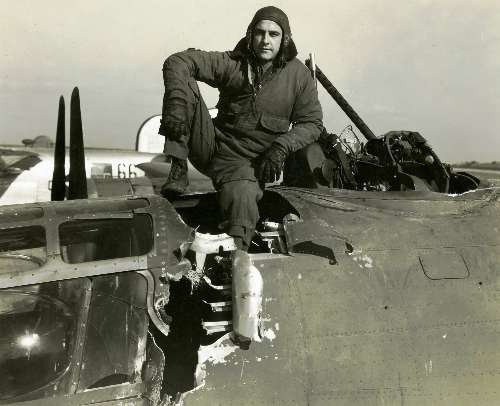
On our 21st mission bombing the Vienna Florisdorf Oil refinery, just after bombs away there was a loud sound of metal hitting metal, that over-covered the normal sounds of flying. The plane pitched upward violently at the same time. A flak shell probably a 125 mm had hit about one foot behind and at waist level of our pilot R. J. von Schriltz. It coursed upward tearing a gash through the plane. It hit a machine gun stripping the perforated cooling barrel, and bent the gun into a ninety degree angle. It also destroyed the plexiglass cover of the turret.
At the same time two shells burst on each side of the aircraft, peppering the fuselage. A fragment, about two inches long and three quarters of an inch thick, just missed me.
It’s been said, “God was my Co-Pilot”, this was certainly the case as that dud never exploded. With our forward speed, if it were timed a fraction later, even the dud would have torn off our left wing. We brought the aircraft home. A Stars and Stripes photographer took this photo, and it appeared in the next issue. The plane was scavenged for parts.
Courtesy of Frank Lashinsky.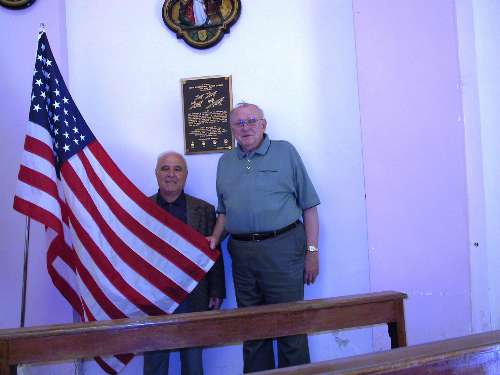
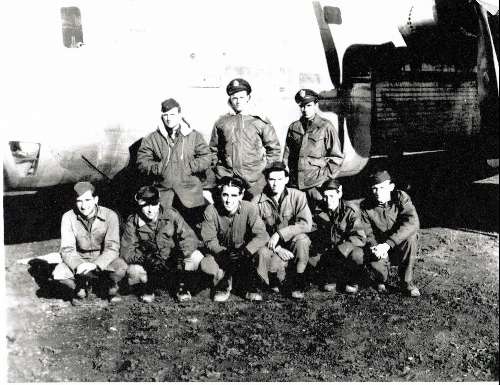
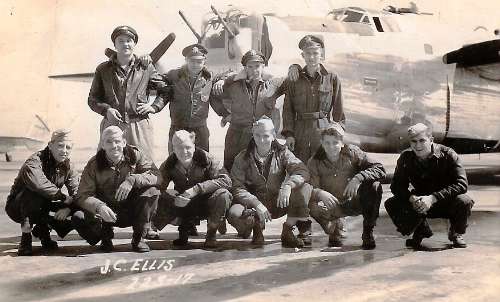
Standing, left to right
Richard J. Von Schriltz (P); Stanley Iverson (CP); Charles Brazelton (N)
Squatting, left to right
William Taylor (E/G); Walter Lipps (RO/G); Alberty Beauchemin (A/G); Craig King (WG); Arthur Colton (BTG); Francis Lashinsky (TG)